I will live as a writer who keeps alive the music of the language, holds head and heart together in the words, and writes in hope and passion that one person will be better because he or she reads what i wrote.
Some national teams have been given unfavourable fixtures for failing
to toe the political line inside soccer’s world governing body, the
Jordanian candidate said on Friday.
Prince Ali Bin Al Hussein, one of the five men competing to take over
as head of FIFA, described a climate of fear and reprisals inside the
scandal-plagued organisation.
FIFA outgoing boss, Sepp Blatter, was suspended in October and banned from football for eight years in December.
“Let me tell you what happens when you don’t go with the recognised
powers in FIFA,’’ Prince Ali, who is head of Jordan’s football
association, told a news conference.
“Development projects mysteriously stall; tournament hosting bids are
suddenly compromised or withdrawn; national teams start to mysteriously
face less favourable fixtures or even referees.
“All of these are effective ways to punish member associations that fail to demonstrate political loyalty.’’
FIFA is mired in the worst crisis in its 111-year history, with corruption investigations underway in Switzerland and the U.S.
Several dozen people, including senior soccer officials, have been indicted.
Allegations against FIFA have so far focused on financial malpractice and money laundering.
Prince Ali’s comments raised the possibility that wrongdoing extended onto the pitch and involved the manipulation of fixtures.
A FIFA spokesman said the group did not comment on the positions of
individual candidates while they were campaigning for office.
Please share your thoughts in the comment box below
Manchester United manager Louis van Gaal said it is unlikely that the club have spoken to Jose Mourinho about replacing him.
Mourinho: Van Gaal doubts talks with Man U
Mourinho, who was sacked by Chelsea in December, has been heavily
tipped to take over from Van Gaal by British media in recent weeks but
the Dutch coach said he had heard nothing of the sort from United
executive vice-chairman Ed Woodward and the Old Trafford board.
“I can only say that I have spoken with Ed Woodward and I cannot
imagine that they have spoken with each other. I think that if they
speak with another manager, they would tell me because our relationship
is like that,” Van Gaal told The Independent.
“I not only have a strong relationship with Ed, but also with the
Glazers. And that is why I am annoyed with all the publicity. I have
been ‘sacked’ three times and now it is about negotiations starting with
Mourinho.”
United, who are fifth in the Premier League, travel to face second-from-bottom Sunderland on Saturday.
Please share your thoughts in the comment box below
Real Madrid striker Karim Benzema has admitted to lying to fellow
France international Mathieu Valbuena over a sex video at the centre of
an alleged blackmailing attempt, Le Parisien reported on Friday.
The French daily quoted extracts from Benzema’s hearing with a judge
on Jan 28 in which the player reportedly said he did not watch
Valbuena’s sex tape after telling the Olympique Lyonnais forward that he
did.
“I should have told him I had not seen it,” Benzema was quoted as
telling the judge. “I was showing off, I was acting…It’s like when you
describe a movie you have not seen. I have never seen that video.”
Benzema, who has been under formal investigation since last November,
has also been suspended indefinitely from the France team. Benzema
approached Valbuena about the tape during a France training camp last
October.
Valbuena was quoted as telling a French judge last November: “He told
me he had seen it, he swore on his daughter’s life, telling me it was
hot.”
Please share your thoughts in the comment box below
The adjudicatory chamber of the independent Ethics Committee chaired by
Mr Hans Joachim Eckert has banned Mr Jérôme Valcke, former Secretary
General of FIFA, for 12 years from all football-related activities
(administrative, sports or any other) on a national and international
level. The ban comes into force immediately.
The investigation against Mr Valcke was conducted by Dr Cornel
Borbély, chairman of the investigatory chamber of the Ethics Committee,
following allegations of potential misconduct related to the sale of
tickets for FIFA World Cups™. During the course of the investigations,
several other acts of potential misconduct arose, in particular abuse of
the FIFA travel expenses policies and regulations, cases involving
related-parties issues and the sale of TV and other media rights, and
the destruction of evidence.
The investigation resulted in a final report that was submitted to
the adjudicatory chamber on 5 January 2016. Adjudicatory proceedings
were formally opened on 7 January 2016.
Amongst other things, the adjudicatory chamber found that a sports
marketing firm had gained an undue advantage from the selling of FIFA
World Cup tickets. In this respect, not only did Mr Valcke do nothing to
stop these activities, he even encouraged the persons responsible to do
so. Furthermore, Mr Valcke repeatedly encouraged them to breach an
agreement concluded between FIFA and the sports marketing firm.
Moreover, by travelling at FIFA’s expense purely for sightseeing
reasons as well as repeatedly choosing private flights for his trips
over commercial flights without any business rationale for doing so, Mr
Valcke, gained an advantage for himself and relatives. In doing so, Mr
Valcke acted against FIFA’s best interests and caused considerable
financial damage to FIFA, while his private and personal interests
detracted him from his ability to properly perform his duties as the
Secretary General of FIFA.
Concerning the issue of TV and media rights for the Caribbean, it was
found that Mr Valcke attempted to grant the TV and media rights for the
2018 and 2022 FIFA World Cups to a third party for a fee far below
their actual market value and had taken concrete preparatory action in
this regard.
Furthermore, it was found that Mr Valcke deliberately tried to
obstruct the ongoing proceedings against him by attempting to delete or
deleting several files and folders relevant to the investigation,
despite being aware of his duty to preserve all data and to collaborate
in order to establish the facts of the case.
As reported by FIFA.com on Friday, the conduct of Mr Valcke as
Secretary General of FIFA constituted a violation of article 13 (General
rules of conduct), article 15 (Loyalty), article 16 (Confidentiality),
article 18 (Duty of disclosure, cooperation and reporting), article 19
(Conflicts of interest), article 20 (Offering and accepting gifts and
other benefits) and article 41 (Obligation of the parties to
collaborate) of the FIFA Code of Ethics (FCE).
In consequence, Mr Valcke has been banned for 12 years from all football related activities and fined CHF 100,000.
Please share your thoughts in the comment box below
Real Madrid will not take any risk in rushing forward Gareth Bale
back from injury and the Wales international will only return when he is
ready, manager Zinedine Zidane said.
Bale has not played since Jan. 17 after damaging a calf muscle in a La Liga match against Sporting Gijon.
Spanish media have reported that Bale, whose Real career has been
blighted by a succession of injuries, suffered a setback in his
recovery.
Zidane said Real needed to be “calm” about an injury that has been “going on for a bit more time for him”.
“If he’s uncomfortable and it hurts him, it’s normal that he could have a setback,” Zidane told a news conference on Friday.
“He’s a very important player for us and we’re not going to take any risks. We want him at 100 percent, not at 80 or 85.”
Zidane said Bale was “in good spirits” although he is set to miss at
least the first leg of Real’s Champions League last-16 clash with AS
Roma in Italy on Wednesday.
“Every player has a different recovery process and he has suffered
with his pains. There’s no need to keep going over it,” the Frenchman
said. “We have to give him time.”
Real, third in La Liga, four points behind leaders Barcelona, host sixth-placed Athletic Bilbao on Saturday
Please share your thoughts in the comment box below
Daughter
of former Vice President Atiku Abubakar has commenced distribution of
CD4 machines, drugs and other facilities to HIV/AIDs treatment centres
in Adamawa State.
Dr Fatima Atiku Abubakar, who is the Commissioner for Health in
Adamawa while flagging off the programme, said the equipments and the
drugs are crucial in the monitoring and management of the scourge.
“We purchase these drugs with the supports of the
World Bank. The Distribution is part of efforts towards achieving the
universal HIV/AIDS coverage,” Dr Fatima said.
She said her Ministry in collaboration with the State Primary Health
Care Development Agency have already identified and trained health
workers across the 21 local governments of Adamawa to manned the
facilities and ensure maximum utilization.
She commended the State Agency for the Control of HIV/AIDS (ADSACA) for its coordinating roles.
Findings revealed that before now, the blood of HIV patients are
usually taken to the nearby Taraba state for CD4 counts due to
unavailability of CD4 counts machines in most treatment centers in the
state.
The
Permanent Secretary, State House, Alhaji Jalal Arabi, on Tuesday
successfully defended the 2016 State House budget proposal of N18.1
billion before the National Assembly.
Addressing members of the Senate Committee on Federal Character and
Inter-governmental Affairs, and members of the House of Representatives
Committee on Special Duties in Abuja on Tuesday, Arabi disclosed that
N3.2 billion of the budget was earmarked for the upgrade of State House
Clinic to Centre of Excellence.
“The budget for the State House Medical Centre
included N3.219billion proposed for the completion of on-going work as
well as procurement of drugs and other mediacal equipment.
“The Medical Centre provides health care treatment for the President
and Vice-President, their families as well as numerous civil servants
working in the State House and across the Ministries, Departments and
Agencies of government and of course, with due respect, including
Parliamentarians and members of the legislature in addition to other
notable dignitaries.
“Interestingly, Mr Chairman, on a lighter note, not only those that
have been captured here attend (the Medical Centre) there are poor of
poorest that attend because we receive reference from Gwagwalada, Garki,
Wuse hospitals.
“So, if they come, we attend to them and interestingly too at no fee at all, we don’t charge
“The anticipated improvement of the Medical Centre will propel it to
serve as a Centre of Excellence and also reduce medical tourism.
“May I also add that the State House Medical Centre, unlike other
Medical Centres does not charge any fees for its services and hence does
not generate any revenue for itself,’’ he said.
Arabi
stated that N3.9billion of the budget was earmarked for the routine
maintenance of the State House, while 394million would be spent on
rehabilitation of dilapidated structures being occupied by security
personnel.
He said that N1.79billion would be spent on replacement and
rehabilitation of mechanical and electrical cables and other accessories
in the State House, saying that these installations had been in place
since the construction of the villa complex in 1992.
“Hence, it has become absolutely necessary to replace the critical
ones in view of the sensitive nature of the equipment especially as they
affect the security of the Presidential Villa.
“Several attempts were made in the past to capture same in previous
budgets, while much concerted efforts deployed since 2012 but to no
avail,’’ he explained.
The Permanent Secretary also disclosed that N699million had been
earmarked for the purchase of five CVU cars, 10 each of 33-seater
Coaster and Hiace buses and utility pick-up van.
According to him, the vehicles are essentially needed for the CVU and
the main pool for staff movements, and huttle of visitors into the
Presidential Villa in view of the current security situations.
“It is in record that there were no purchase/replacement of State
House pool vehicles in the State House in the last seven years despite
the deteriorating level of most them,’’ he added.
In his response, the Chairman, Senate committee on Federal Character
and Inter-governmental Affairs, Tijjani Kaura, expressed satisfaction at
the presentation made by the Permanent Secretary.
He noted that the explanation offered on the State House Clinic budget had cleared the air on the misconceptions on the matter.
Similarly,
Chairman House of Representatives committee on special duties, Alhaji
Nasiru Zango-Daura commended Arabi for the details provided in his
presentation, assuring that the committee would work on the proposal as
required.
Former
Governor of the Central Bank of Nigeria (CBN) Professor Charles Soludo
has shown over the years that he is never scared to air his views. He
has spoken again, now faulting the implementation of the Treasury Single
Account (TSA) by the Federal Government and the policy regime of
foreign exchange restrictions of the CBN.
Soludo spoke on Thursday as a guest lecturer at the third anniversary
lecture of online magazine, Realnewsmagazine.net in Lagos. He stated
that while the TSA could restore sanity and transparency into Nigeria’s
financial system, the initiative could be better deployed. He stressed
that “concentrating the cash at the CBN when the economy needs reviving
is not sound economics.”
Speaking on the topic: ‘Can the New Buharinomics
Save Nigeria?’ the former CBN boss also faulted the policy regime of
foreign exchange restrictions being implemented by the CBN including the
ban on 41 items on foreign exchange access and the debate on whether to
further devaluate the naira or not, arguing that such policies will
actually cause the economy to implode, worsen unemployment and
increasing poverty level.
“For the better part of this year, the external shocks to the economy
have been complicated or accentuated by a gamut of the “tried and
failed” command and control policy regime: de facto fixed exchange rate,
largely fixed CBN monetary policy rate, crude capital controls, veiled
form of import bans through a long list of ‘ineligible for foreign
exchange’, de facto scrapping of domiciliary account established by law,
etc. At first, I thought this was the usual kneejerk response of
policymakers to a ‘sudden’ shock. We tried a milder variant of this for a
few months during the 2008/2009 unexpected/unprecedented global crisis
(with global liquidity squeeze and massive capital flight) but even
then, it was communicated as a ‘short-term crisis response’ and it was
quickly dismantled. We now know what works and what doesn’t even at a
time of crisis.
“As
one reads the confusing statements from government in the media: ‘We
won’t devalue’, ‘we won’t devalue for now’, and the emotional debate
about ‘nationalism’ around issues of import ‘bans’ and capital controls,
one wonders whether it is still a ‘short-term crisis response’ or a
permanent shift back to the old policy regime of pre-1986. Even if the
government initially intended it as a short-term measure, interest
groups have emerged and are lobbying to make the policy shift permanent.
To add to the confusion, the policy is communicated as a “directive”
from PMB as widely publicised in the media.”
“In the specific case of Nigeria currently buffeted by a terms of
trade shock with micro imbalances especially fiscal and current account
deficits as well as supply side constraints and with the economy
skidding to a halt with rising inflation and unemployment, the question
is, how should relative prices or asset prices including exchange rate
and interest rate adjust to reflect as well as shape whatever economic
fundamentals? External shocks do not kill an economy.
“How you respond will determine whether you worsen it or meliorate
the terms of trade shocks. That is what we are facing, the classic one.
And how you respond to terms of trade shocks depends on whether the
shock is from the monetary, nominal shock or whether it is from the real
side shocks. And I would say on this micro economic theory and evidence
around the world are pretty much unambiguous. That faced with terms of
trade shocks, countries with flexible exchange rate regime adjust faster
and adjust better with less negative impact on growth and employment
than those with fixed exchange rate. This is global evidence, pretty
much unambiguous for countries facing terms of trade shock, that
countries that allow relative pricing including exchange rates to become
the key adjusters when faced with terms of trade shock have always
almost done better than those than resorted to exchange rate fixing and
distorting controls.”
“In
theory, if you don’t allow prices to adjust, quantities will adjust and
the quantities that will adjust are output and employment. That is the
experience we have had in Nigeria over the years. And that is what is
happening today. Output and employment are adjusting with vengeance. My
thesis is that from Nigeria’s own evidence, that the current policy
regime is inconsistent with the objectives of creating jobs, growing
income and reducing poverty. Nigeria since 1973 can become a laboratory.
Since 1973, we have become episodes of positive and negative price
shocks. If you divide the episodes of positive oil price shocks,
episodes of negative price shocks and also match them with responses of
policy regimes, the evidence is that, in all cases, fixed exchange rates
with controls, the economy has always done worse in that regime than in
under flexible regime.”
Speaking further, he said: “From Nigeria’s evidence, current policy
regime is inconsistent with objective of growth, job creation and
poverty reduction. The current economic hardship is largely our choice
and not just oil price shock: The current slump of the economy was
predictable and largely avoidable. Just as it happened in 1981-85, the
economy has been on a tailspin. There is now about 4 % growth shortfall
relative to past trend, and this cannot be explained by fall in oil
prices alone. For the first time since 1990s, per capita growth rate (on
annualized basis) is now negative implying that poverty is also
escalating; capital market has lost trillions, inflation and
unemployment are on the rise. JP Morgan has delisted our local currency
bonds and Barclays is threatening same, while the cost of borrowing for
Nigeria rises. Foreign capital is on the run, while domestic savings is
miniscule. It was ‘headline news’ when FG paid October salaries, while
states are steeping in massive debt.”
“Policy
choices entail costs and benefits, but the preference of one to another
should be based on the “net positive effects”, depending on the stated
objectives. To sustain the current arbitrarily pegged exchange rate will
require a steep rise in interest rate and squeezing of bank credit to
the private sector. Alternatively, intensifying the ever opaque and
distorting controls and ‘bans’ will also severely harm the private
sector. I will be surprised if the productive sector is not already
feeling the heat. The irony is that it is the small businesses (which
have no voice or power) that are suffering the most. Many are simply
being choked to death by the ‘controls’. To repeat, the current policy
regime is inconsistent with the objectives of creating jobs, growing
income and reducing poverty,” Soludo said.
Last week, U.S. Ambassador to Israel Dan Shapiro caused a stir by ever-so-gently telling the truth about the occupation. Speaking
to a conference at Tel Aviv’s respected Institute for National Security
Studies, he addressed “the latest increase in tensions and violence
between Israelis and Palestinians,” and observed, “Too many attacks on
Palestinians lack a vigorous investigation or response by Israeli
authorities; too much vigilantism goes unchecked; and at times there
seem to be two standards of adherence to the rule of law: one for
Israelis and another for Palestinians.”
The outraged reaction from Israeli officials—which included a demeaning slur
against the American ambassador by a former Netanyahu aide, as well as
Netanyahu himself trying to shame Shapiro by noting the recent murder of
an Israeli woman whom Shapiro had actually memorialized in his speech—was
as overwrought as it was predictable. The fact that Shapiro’s words of
concern were far outnumbered by words of solidarity and support mattered
little. It has been the policy of the Netanyahu government that even
the most carefully worded public criticisms by its closest friends shall
be treated as an attack on the very foundations of the state.
It is simply a matter of fact that Israelis and Palestinians in the
West Bank live under two different systems of law—the former under
Israeli civilian law, the latter under military law imposed after the
territories were occupied in 1967. If an Israeli and Palestinian were to
be arrested at the same spot in the West Bank at the same moment for
the same crime, they would be subjected to two entirely different legal
procedures, the former Israeli civil law and the latter military law. In
this regard, it’s only Shapiro’s use of “seems” that seems a bit odd.
There’s also the less formal, but certainly no less real way in which
the power of the state is used differently against both groups—or to be
more accurate, how it is used for Israelis and against Palestinians,
something that has been well documented
by Israeli and Palestinian human rights groups. Israeli settlers are
treated lightly because the system as a whole is designed to protect
them and to facilitate the transfer of Palestinian property into their
control.
“It is not just the official letter of the law that facilitates the
settler land-grab, but the way in which it is implemented and enforced,”
said Assaf Sharon, an assistant professor at Tel Aviv University and
co-chair of Molad, a liberal Israeli think tank. “Susya (a village in
the South Hebron Hills in the midst of a longstanding legal battle
to prevent its demolition) is a good example: Palestinian shacks built
by poor peasants who were forcibly evicted from their homes are being
destroyed, although its indisputably their own land, and while their
neighboring illegal outposts, some of which are on private Palestinian
land, are growing unhindered.”
The uproar over Shapiro’s remark about double standards has
overshadowed a broader critique embedded in his speech, however, one
which the Obama Administration has been escalating over the past months:
that under Netanyahu Israel has been engaged in a concerted effort to
reverse the Oslo process in the West Bank.
Back in December, in remarks
to the Brookings Institution’s Saban Forum, Secretary of State John
Kerry toured the waterfront of the U.S.-Israel relationship, reiterating
the U.S. commitment to Israel’s security amid a region in turmoil.
While unequivocally condemning Palestinian violence, Kerry also noted,
“Palestinian hopes are also being dashed by what they see happening
every day. They’re focused on a reality that few others see, that the
transition to greater Palestinian civil authority contemplated by the
Oslo process has in many ways been reversed.” Kerry then got noticeably
specific:
In fact, nearly all of Area C, which comprises 60 percent
of the West Bank, is effectively restricted for any Palestinian
development, much of it claimed for Israeli state land or for settlement
councils. We understand there was only one Palestinian building permit
granted for all of Area C all of last year. And settler outposts are
regularly being legalized while demolition of the Palestinian structures
is increasing. You get it? At the same time the settler population in
the West Bank has increased by tens of thousands over just the past five
years including many in remote areas.
“Settlements are absolutely no excuse for violence. No, they’re not.
And we are clear about that,” Kerry went on. “But the continued
settlement growth raises honest questions about Israel’s long-term
intentions and will only make separating from the Palestinians much more
difficult.”
U.N. Ambassador Samantha Power soon echoed Kerry’s analysis, in a speech
to the Haaretz/New Israel Fund conference in New York later in
December. Amid a speech that largely focused on the depth of support
that Israel had received from the Obama Administration, Power referred
back to Kerry’s Saban Forum speech and cautioned that continued
settlement growth “raises honest questions about Israel’s long-term
intentions and will only make separating from the Palestinians much more
difficult.”
Shapiro also cited Kerry’s Saban speech and laid a similar critique,
ending with the same question: “[We] are concerned and perplexed by
Israel’s strategy on settlements. This government and previous Israeli
governments have repeatedly expressed their support for a negotiated
two-state solution—a solution that would involve both mutual recognition
and separation. Yet separation will become more and more difficult if
Israel plans to continue to expand the footprint of settlements,” he
said. “Settler outposts are being legalized—despite earlier pledges to
the United States not to do so—while routine, administrative demolition
of Palestinian structures continues. Again, the question we ask is a
simple one: What is Israel’s strategy?”
It is simply a matter of fact that Israelis and
Palestinians in the West Bank live under two different systems of
law—the former under Israeli civilian law, the latter under military law
imposed after the territories were occupied in 1967.
This analysis—the Israelis are reversing Oslo—is one that I’d heard
privately from multiple administration officials over the past year. But
now that it’s finally been made publicly, the question is: What is the
United States going to do about it?
For the moment, it appears that they’re going to let the European
Union play bad cop. After bureaucratic discussions over set of possible
sanctions—which were described in a leaked document in late 2014—dragged on for years, last November the E.U. finally issued new guidelines requiring
that goods made in Israeli settlements be labeled as such. Though the
step would have a minimal economic impact, the symbolic impact was
considerable, and Israeli leaders reacted angrily.
Rather than back off, however, E.U. officials doubled down, issuing a declaration
earlier this month reiterating their policy of differentiation between
Israel and the occupied territories, and warning of “further action in
order to protect the viability of the two-state solution, which is
constantly eroded by new facts on the ground.”
While accusations from the Israeli right and their American allies
that the United States was behind the E.U.’s moves are overblown, the
Europeans wouldn’t move forward without being reasonably confident that
the United States wouldn’t oppose them. When asked about the E.U.
measures, U.S. spokespersons have consistently made clear that the
United States considers such steps consistent with U.S. policy. In the
language of international diplomacy, this is a green light.
While the new U.S. openness to such steps is welcomed, European
analysts and officials I spoke to still wonder how far it will go and
just how President Barack Obama will use his last year to address an
issue to which he has committed so much time and effort. While other
conflicts in the region have understandably pushed Israel-Palestine down
the list of priorities, there’s still consensus among European
governments that steps need to be taken to arrest the current
deterioration in the status quo. The French, for their part, remain
interested in a U.N. Security Council resolution laying out parameters
of a final agreement, but have yet to receive a positive signal from the
United States.
In a recent piece in Foreign Affairs,
former U.S. Ambassador to Israel Dan Kurtzer suggested moves that the
administration could make short of a U.N. resolution: ending the tax
exemptions for private U.S. donations to settler groups, which
essentially function as taxpayer subsidies to activities that run afoul
of U.S. policy and, as a new report from Human Rights Watch
shows, contribute to human rights abuses; and a dollar-for-dollar
subtraction of any amount spent by Israel on settlement construction
from U.S. aid to Israel. “These moves would have a significant political
impact in Israel, as opponents of the settlements would use the change
in U.S. policy to galvanize support for their views,” Kurtzer wrote.
“The settlements represent a policy of choice, not of necessity, and
will do little to guarantee Israel’s long-term security. It is long past
time for the United States to match its words with deeds.”
While the domestic politics of the U.S.-Israel relationship might
give the administration pause, especially in the midst of a presidential
campaign, they might be able to expect some support from a surprising
source: Israel’s security establishment, some of whose leading members
have long warned that the occupation is a grave burden—and even an
existential threat—to Israel. Speaking a few days after Shapiro at the
INSS conference, Lt. Gen. Gadi Eizenkot, Israeli Defense Forces chief of
staff, noted the
difficulties. “There are 161 settlements in Judea and Samaria, about
400,000 residents living among 2 million Palestinians,” he said. “The
populations are intermingled, which creates a huge operational
challenge.”
Some Israelis are hopeful that U.S. steps to create consequences for
the occupation could help shift the political landscape in Israel. Assaf
Sharon noted that years of blocking such measures have in fact
empowered Israel’s right wing. “As a patriotic Israeli its not my place
to tell the [U.S.] administration what to do,” he says. “The
administration’s official position is that it can’t interfere in Israeli
politics, but when they shelter this extremist right-wing government
from the consequences of its actions—for example by vetoing reasonable
U.N. resolutions that many Israelis support—they are interfering, just
for the wrong side.”
The trouble is that Podhoretz has a great ridiculous fat-bellied mind which he pats too often. —Allen Ginsberg, 1958 Fortunately [Ginsberg’s] ideas are not for the moment especially
fashionable among the middle-class young. And yet there is enough
resemblance between the current situation and the cultural climate of
the 50’s to fear that his siren song may yet find its insidious way into
the ears of yet another generation of restless kids, misleading and
corrupting them as it did so many of their forebears in the all too
recent past. —Norman Podhoretz, 1997
***
The young literary critic and editor Norman Podhoretz was at home one
evening, in the fall of 1958, when he got a phone call. On the other
end of the line was a woman who said she was Jack Kerouac’s girlfriend.
“I’m here with Allen and Jack who would like you to come see them tonight,” she said.
For a brief moment Podhoretz thought (hoped) it was a practical joke.
Over the past year he had written three essays on the Beats, each one
arriving at more certainty than the last that they weren’t the literary
redeemers he’d been searching for. They weren’t the ones who would carry
his generation, and the culture, out of its Eisenhower-era doldrums.
His culminating piece, “The Know-Nothing Bohemians,” published in the spring issue of Partisan Review,
had been brutal. Not only were Kerouac, Allen Ginsberg, and the rest
mostly bad writers, who’d written bad stories and books and poems, they
were bad people, champions of dangerous impulses.
“The spirit of hipsterism and the Beat Generation strikes me,” he’d written,
“as the same spirit which animates the young savages in leather jackets
who have been running amok in the last few years with their
switchblades and zip guns. … Even the relatively mild ethos of Kerouac’s
books can spill over easily into brutality, for there is a suppressed
cry in those books: Kill the intellectuals who can talk coherently, kill
the people who can sit still for five minutes at a time, kill those
incomprehensible characters who are capable of getting seriously
involved with a woman, a job, a cause.”
A powwow with Ginsberg, with whom he’d been friendly back in college,
and Kerouac, whom he’d abused in print, was such a perfectly awful
thing to contemplate that it seemed to Podhoretz it almost had to have
been cooked up by a friend.
“But then Ginsberg got on the line,” wrote Podhoretz in his memoir Ex-Friends,
“and the minute I recognized his voice and realized that this was no
joke, practical or otherwise, I caught myself desperately fishing for
some graceful way to avoid what was sure to be a very unpleasant
encounter.”
He was unwilling to be the coward, however, and Ginsberg was
insistent. So he agreed. He’d make the trip down from his place on the
Upper West Side to the Village, and hear them out. Before he went,
though, he had to contemplate the state of his person. He needed a
shave, and his clothes were all rumpled and ratty. No good. He couldn’t
show up to the battlefield kitted out like the enemy.
So he shaved, looked around at what else was available to wear, and remembered one of the lines from Ginsberg’s “Howl,”
a poem Podhoretz had actually found quite impressive when he’d first
encountered it back in 1956. Ginsberg had written, of the best minds of
his generation, that they were:
burned alive in their innocent flannel suits on
Madison Avenue amid blasts of leaden verse & the tanked-up clatter
of the iron regiments of fashion & the nitroglycerine shrieks of the
fairies of advertising & the mustard gas of sinister intelligent editors, or were run down by the drunken taxicabs of Absolute Reality.
Podhoretz wasn’t certain that Ginsberg had been thinking of him, in
speaking of those sinister intelligent editors, but he thought he might
have been an inspiration. And the poem wasn’t quite saying that such
editors would be wearing flannel suits. But it didn’t have to be precise
if you already had a taste for self-dramatization, not to mention the
necessary suit. So he suited up, three-piece Brooks Brothers suit, tie,
and everything, and headed downtown.
From the moment Podhoretz got to the apartment, the two men went at
each other. First they argued over whether Podhoretz would smoke pot
with Ginsberg. Podhoretz had smoked it a few times before, but he wasn’t
into it, and in any case he wanted his wits about him. So he refused.
Then they got to the meat of the matter.
“All night long he hectored and harangued me for my stupid failure to
recognize both Kerouac’s genius and his,” remembered Podhoretz, “and
the more I fought back, the harder he tried to make me see how
insensitive I was being. It was I, he kept railing, who was the
know-nothing, not they.”
The argument they had—for four hours, by Podhoretz’s later
reckoning—was a multileveled one. It was literary: Podhoretz had no time
for the style of the Beats. He thought they’d fallen victim to a
spurious notion that the way to evoke the feeling of spontaneity and
vitality on the page was to write spontaneously, from the gut, without
care or precision.
Ginsberg thought Podhoretz had shit for ears—had no feel for language
himself so naturally was unable to perceive that Kerouac, in
particular, was using spontaneous-seeming language to achieve subtle
lyrical effects.
The argument was also sociological. Podhoretz granted that the Beats
had perceived, correctly, the torpor of 1950s America, but rather than
rigorously applying their literary imaginations to the project of
generating new sources of vitality, they had simply rejected it all,
thrown in with “primitivism, instinct, energy, ‘blood.’ ”
At its worst, by Podhoretz’s lights, this was a kind of
proto-fascism, the glorification of violence for the sake of its
dynamism and clarifying force. At its least bad it was a celebration of
the infantile and adolescent in American culture.
Ginsberg saw in Podhoretz just another defender of the bourgeois
status quo, afraid of the liberatory id of the American psyche. He was
also a herd-minded member of a literally intellectual establishment that
had been too stodgy to give Ginsberg his due as a poet.
The argument was also very personal. Podhoretz’s first piece of
published work, a long undergraduate poem, had been edited and published
by Ginsberg when they were both at Columbia. Podhoretz had been
Ginsberg’s successor in the role of favored student of Lionel Trilling.
After college they’d run in many of the same literary and intellectual
circles, and had remained aware of each other. More than anything they
were both vastly ambitious, rather narcissistic, moderately insecure
Jewish-American young men of the same generation bent on using words not
just as a vehicle with which to understand themselves but, if at all
possible, as the hammer and chisel with which to carve out spaces in the
culture that corresponded rather precisely to their particular
projects. And those projects, because they began from such similar
origins before going off in such different directions, couldn’t help but
bring the two men into a kind of intimate conflict with each other.
And so they went back and forth, back and forth, for hours. Ginsberg
was for homosexuality; Podhoretz was against. Ginsberg said that
middle-class values should be exploded once and for all. Podhoretz
thought they were in need of moderate revision. Ginsberg was a drug
experimenter; Podhoretz liked to drink (too much, as he would later
realize), but was suspicious of drugs. Ginsberg was a literary rebel who
craved acceptance from the establishment. Podhoretz had been anointed
by the establishment but feared that its approval was more of a curse
than a blessing. Ginsberg was a poet, Podhoretz a literary critic.
Ginsberg, though he was older by a few years, was spiritually at home on
the far side of the radical cultural break that was coming. Podhoretz,
it would turn out, was born both too late and too early. He heard the
call of the sixties, but he would never be at home there. In his heart
he was a child of the 1950s. At his most adventurous he would be a
creature of the early sixties, whose vision of the good life was some
kind of fusion of New York intellectual–style depth, moderate Left
politics, and Rat Pack insouciance.
“Inevitably, then, and along with everything else, it was myself I
was defending,” remembered Podhoretz. “… As against the law-abiding life
I had chosen of a steady job and marriage and children, he conjured up a
world of complete freedom from the limits imposed by such grim
responsibilities. It was a world that promised endless erotic
possibility together with the excitements of an expanded consciousness
constantly open to new dimensions of being: more adventure, more sex,
more intensity, more life. God knows that as a young man full of energy
and curiosity, and not altogether averse to taking risks, I was tempted
by all this. God knows too that there were moments of resentment at the
burdens I had seen fit to shoulder, moments when I felt cheated and
when I dreamed of breaking out of limits I had imposed upon myself. Yet
at the same time I was repelled by Ginsberg’s world.”
With the stakes so high, no quarter could be given, and on they went,
past midnight, until they ran out of things to throw at each other. As
Podhoretz left, Ginsberg threw out one last sally: “We’ll get you
through your children!”
A decade later that threat would prove one of the fulcrums around
which Podhoretz would execute his hard pivot to the right. At that
moment, though, in the fall of 1958, Ginsberg just sounded grandiose to
Podhoretz’s ears. The Beats, after all, weren’t the problem. They were
an overreaction to it, a symptom of it. They didn’t want to just take a
swim in the Plaza fountain at midnight (Podhoretz’s metaphor for the
cultural loosening up his generation of conformists needed to explore).
They were so consumed by emptiness they felt they had to have sex in the
Plaza fountain, with other men, while high, in order to approximate the
feeling of being alive.
(Illustration: Tablet Magazine; original image: Shutterstock)
Recent events have once again highlighted the problem of trying
to talk about the relationship between Jihadism and Islam. The
incapacity of the Democratic candidates to even discuss
what may have led to the mass murder at San Bernardino, coupled with
the controversial Republican responses by Donald Trump and others,
illustrate a dysfunction that poses a broad and continuing threat to
life and liberties in the West. Current U.S. policy is based on a
broadly held consensus that: 1) We should not use the term extremist or
radical or violent to modify Islam (“religion of peace”): e.g., ISIS is
not Islamic. And 2) we should not make any connections between the
behavior of violent extremists who claim to follow Islam, and the vast
majority of Muslims who do not approve of their deeds.
Any public figure who moves too far along the lines of an inquiry
into the links between radical Islam and the larger Muslim community,
runs the risk of being called an Islamophobe, whose hurtful comments
insult moderate, peaceful Muslims, who might therefore turn into
extremists.
The illogic here might normally arouse some suspicion. If extremist
violence “in the name of Islam” has nothing to do with the actual
religion of Islam, why would peaceful Muslims become so offended by the
discussion that they would suddenly embrace murderous extremism? Yet
this argument has become so widely current that some specialists even urge that we should never use terms like jihadi or radical Islam
to designate terrorists, because that grants these mass murderers too
much legitimacy. On the other extreme we find people who argue that
there is no difference between Islam and coercive Islamism.
In place of such elaborate deference or sweeping dismissal, I suggest
we look at a matter not so much of theology, or even exegesis, as of “religiosity”—a
particular “style” of living one’s religion, the way one’s religious
convictions affect the way one treats others, both co-religionists and
outsiders. Religiosity goes a long way toward understanding how any given believer reads his or her sacred and legal texts, and to what theological principles they will find themselves drawn.
Different religiosities “live” the teachings of sacred scriptures in
varying ways. Some flee the company of humans entirely (hermits), or
seek the company of the co-disciplined (monks, communes), some treat
others with the same dignity they want for themselves (communities of
faithful, citizens of civil polities),
some feel that the best way to teach is by example, others testify to,
and share their “truth” (missionaries), and still others feel that by
dominating non-believers, they prove the “truth” of their religious
faith.
I would like to call this last religiosity, “triumphalist.” Triumphalist religiosity,
which makes claims to truth subject to contests for dominion, is
fundamentally hostile to the modern democratic project, this ongoing
experiment in human freedom of speech and faith. In focusing on this
style of religious life, we can identify the site of the debate that
needs to occur between Islam and modern democratic societies the world
over, and hopefully turn a clash of civilizations (which I believe that
the West is currently losing), into a productive thrash.
***
If “religiosity” designates a religious style, a way of “living”
one’s religious beliefs, then “triumphalist religiosity” designates
believers who need to assert their own dominance as a visible sign of their superiority, as a proof
of God(s) “favor.” Put somewhat differently, “because we rule, our god
is the true god.” In monotheism: “We are God’s chosen because we rule.”
Many tribal peoples worshiped triumphalist gods, certainly those
warrior tribes like the Scandinavians, the Germans, the Romans, the
Greeks, etc. At a basic level, triumphalism is a natural human, indeed
mammalian impulse, most visible in the behavior of dominant alpha males.
All the ancient imperial gods—including their (semi-) divine earthly
rulers—reflected this triumphalist ethos. We are victorious and rule
because we worship the most powerful god(s). In monotheism, this kind of
triumphalism leads to religious imperialism: One God, One Rule, One Faith.
Triumphalist religiosity places great importance on a visible
deference paid to true believers. It both demands that others pay it
respect and, to varying degrees depending on circumstances, disrespects
others as a matter of principle. Triumphalists find public
criticism unacceptably disrespectful, and interpret blasphemy laws
aggressively in order to silence dissent. Intolerance, disdain,
violence, repression, intimidation—all of these deeds and attitudes,
reflect triumphalist religiosity in its crudest forms. Historically,
then, triumphalists exercise power in an authoritarian manner, and, when
insecure, tend, domestically, toward inquisitorial persecution of
dissent (heretics, apostates) and humiliation of non-believers, and
internationally, towards holy wars (Jihads, Crusades) and the massacre
of those who resist.
There is a close correlation between triumphalist religiosity and
tribal warrior, honor-shame culture: When he found out about the
[salvific] crucifixion, the triumphalist tribal war chief, Clovis, exclaimed: “If me and my men had been there, we would have avenged this wrong.” When the Parisian clergy demanded redress for the Chevalier de la Barre’s refusal to doff his cap
at their Corpus Christi procession, they were asserting their rights to
public deference, and the state made good on their outrage by torturing
and beheading the insulter.
When the U.S. Constitution separated Church and State, it formally
renounced triumphalist religiosity. Every citizen of the democracy, and
all the religious groups therein, have full freedom to believe that they
are special, the one and only true faith, the exclusively chosen of
God—in their own minds and hearts, in their own community of conviction.
But they cannot use the state (i.e. coercive power) to impose that
perception on others. This involves a collective deed of renunciation so
rare, that the U.S. Constitution (1789) represents the first time in
the 1750-year history of Christianity that tolerance of dissenting faith
became a “winner’s creed.”
Indeed, this separation of church and state causes great
psychological pain to triumphalists, since visible dominance plays so
central a role in their sense of certainty about the truth of their
beliefs. Modern freedom and the “public sphere” as a “marketplace of
ideas,” as a (self-)critical public discourse in which one cannot use
force to “win” an argument, constitutes a major insult to
triumphalists, whatever the faith they proclaim. The ability of American
Christians to accept the pain of giving up their triumphalism
represents a major step forward in the career of modern democracy.
And yet, today, many of us take this painfully acquired principle of
(post-)modern discourse for granted and assume triumphalism is a dead
letter. When we say in response to the return of holy war, or of public
slavery, “but it’s the 21st century, for crying out loud!” we mean
precisely that: such behavior is completely out of place in today’s
world. As a result of this cognitive egocentrism,
however, not too many people in the West predicted that the 21st
century would see the global rise of an aggressive triumphalist
religious movement, nor predict that those most targeted would hesitate
to even identify the (nonexistent) problem. ***
Historically, religious triumphalism played an important role in
shaping Muslim attitudes towards infidels. When Muslims came to rule a
society, as they did frequently in Islam’s first centuries of rapid,
global expansion, they developed the
dhimma, a term often translated as a contract of “protection.” In theory,
given the practices of rulership at the time, it was a good deal: live
by Muslim rules and you can live in peace. For some
Christian “heretics,” living under “orthodox” triumphalists, it was a
definite improvement.
In practice, however, the dhimma meant largely that
Christians and Jews (later Zoroastrians and Hindus) who refused to
convert to Islam bought their safety by their compliance with the
demands of their “protectors” to show them the honor they felt they were
due. Compliance assures peace, defiance brings retaliation. Not all
Muslims availed themselves of the power to treat dhimmi with contempt; but the more triumphalist, the more the need for visible superiority.
In other words, the laws of the dhimma legislated the
degradation of those “chosen” infidels considered “people of the
book”: stigmatization (dress codes), servility (cannot ride horses, must
step aside in street), legal inferiority (in bearing witness, in
bringing accusations), tributary status (jizya), and religious inferiority (restrictions on sites of worship). Triumphalist Muslims designate infidels who are (not yet) dhimmi, that is, independent and autonomous infidels, as harbis, those destined for the sword (hrb). They live in Dar al Harb (Realm or Abode of the Sword or of War).
Right now, the core element of the jihadi impulse is triumphalist: “We are the warriors who, in conquering for Islam, prove that Allah is the most high God and Muhammad his true prophet.” The greatest appeal that they exercise on the larger Muslim Ummah
is precisely in terms of this assurance that Islam is destined to rule
the world, this psychological comfort that Islam is the true faith,
despite its apparent lowliness in the modern world. And when people
speak of the radicalization of mosques in the West, they mean the introduction of an aggressive triumphalist Islam.
The triumphalist Muslim motto: Where there was Dar al Harb, there shall be Dar al Islam.
This religiosity informs a wide range of attitudes, particularly
visible in the widespread acts of contempt and disdain that
triumphalists show for infidels. This behavior runs the gamut from
everyday forms of intimidation and scorn, to the programmatic rape of
infidel women, and the slaughtering those who “insult” the prophet.
In Paris in 2015, jihadis began with attacks on blasphemers and Jews
and ended with attacks on the nightlife scene. Some puzzled about why.
Whence this hostility? It seems less incomprehensible when one realizes
that triumphalists find any independent infidel, especially those who are enjoying their (immoral) freedom, intolerable.
While different believers have different thresholds at which they will
become violent, all triumphalists are susceptible to the Jihadi
temptation. When people warn of the negative impact of insults on
moderate Muslims’, they refer, often without acknowledging it, to this
tipping point at which triumphalists find the behavior of insufficiently
deferential infidels unbearable.
Culturally, triumphalism is at the intersection of two powerful
social forces: a tribal warrior ethos that appeals especially to the
youth, and an imperial, millennial ethos that mobilizes the drive for
world conquest. Together they constitute a powerful recruiting device
urging hormone-riddled young people to join the apocalyptic global
battle to implement Allah’s plan for a global Caliphate. And as
victorious warriors, to them go the spoils of holy war.
***
The ability to identify this behavior and the attitude underlying it,
constitutes a critical element in the defense of free and tolerant
societies. One of the most significant dimensions of this problem
manifests itself in a key dimension of the triumphalist Muslims’ war on
the West: the matter of honor, disrespect, and hurt feelings. By
insisting on the hurt feelings of the community, Muslim triumphalists
have pressured Western harbis into making extensive concessions on the cognitive battlefield.
In the world of victimization discourse so prevalent on campuses
today, for example, triumphalist Muslims have learned that, when
attacking the West, they can lead with their glass chin: How dare you
offend us so? They can, thereby, maneuver a conflict-averse Western
culture into conceding and placating them. The widespread consensus that
one should not hurt the feelings of “marginalized and underrepresented
minorities,” has been an enormous boon to triumphalist Muslims.
As a result, there’s a significant and troubling overlap between
Western sensitivity to minority feelings, and Muslim triumphalist
attitudes toward infidels. When our intellectuals distance themselves
from Charlie Hebdo, insisting on the importance of not
offending Muslims, or our publishers reject things Muslims will find
provocative, they insist that this is a show respect and
consideration. But while westerners think they’re being generous,
triumphalist Muslims see them complying with their demands, behaving as
proleptic dhimmi, who submit without even being conquered.
And when Westerners committed to these displays of “respect,” attack
as “Islamophobes” fellow infidels who do criticize Muslims as
“Islamophobes,” they are, from the perspective of the triumphalist
Muslim, behaving like dhimmi leaders have always behaved: silence any dissent within the ranks before it goes public and brings retaliation to the whole community. In modern parlance: stigmatize critical discourse about Muslims as “essentialist … racist … xenophobic … Islamophobic.”
This unspoken dimension of the problem explains the stridency with
which Western liberals assault critics of Islam: They are afraid to
insult triumphalist Muslims and view those who do, as the problem. Thus
when women dress provocatively, or Jews wear kippas, they provoke triumphalist Muslim violence.
By failing to ask for even minimal reciprocity, we have
systematically diminished our own democratic public sphere, where we now
see a wave of tragi-comic mobilizations of this culture of offense
that have strange and (should be) unwelcome echoes of both brown shirts
and Maoist “struggle sessions.” These represent the epitome of what a
modern, free and tolerant society cannot abide, and they offer
triumphalist Muslims an ideal opportunity to demand submission to their
insistence that their sensibilities not be offended. Until we understand
the magnitude of triumphalism’s deep atavistic wells of desire, the libido dominandi from
which it draws its strength on the one hand, and the magnitude of the
accomplishment that democratic polities have achieved in pruning it back
on the other, we cannot begin to deal with the challenge we face.
And yet, by confronting it, we might begin to figure out what to do.
Among other things, an appreciation of the power of raw, pre-modern
triumphalism in Islam allows us to grasp how small the differences that
separate the “right” from the “left” in Western democracies. The split
between progressive and conservative that looms so large in the current
public sphere, becomes nearly indistinguishable when mapped on terrain
that includes open triumphalist religiosity. Only when “left” and
“right” leave off our narcissism of small differences, and start to act
in coordination in the defense of our common values, can we begin to
defend democracy and freedom. Only then can we begin to shape
substantive citizens capable of tolerance, of granting others the
dignity we wish to receive, but also capable, in return, of demanding
basic reciprocity, which begins with the struggle against triumphalism.
Only that way, can one imagine a relatively peaceful and tolerant 21st
century.
What’s with flying cars that have captured the imagination of many
enthusiast and industry watchers for the last few years? It seems that
the ability of navigate a vehicle mid-air has charmed many drivers and
enthusiasts that they are counting on the months and years that finally
the world will be able to finally unveil a mass-produced flying car. For
many, the ability to drive cars on and off the road is no longer
enough, and mid-air is the next frontier. And it isn’t just the ordinary
drivers and commuters that are dreaming of the flying cars. Even some
upstart car manufacturers are trying to tap into the passion. AeroMobil,
a company from Slovakia has announced that it has successfully
developed a prototype for a flying car called AeroMobil 3.0. Scheduled
for release in 2017, the prototype will instantly transform from a car
to a plane in seconds. So is this the sign that everyone is hoping for
that indeed a flying car is soon to arrive? Sorry to bust the
imaginative bubble but mass produced flying car is out of the radar.
While a prototype is in the works, there are obvious reasons why a
flying car will not become a choice mode of transportation for many in
the next future. Here are five reasons why.
1. Flying cars are too noisy for comfort
Elon Musk of Tesla has already shot down, or at least does not
believe that flying cars is in the radar in the next few years. There
are a number of reasons he says, but one thing he shared is about the
noise production associated with flying cars. If you are looking at a
heavy vehicle according to Musk, then you can expect a lot of noise.
Musk explains his case by using the helicopter as an example. He says
that this is the closest that we have with a flying car, and it produces
a lot of noise. So just imagine a flying car cruising mid-air, or a
group of flying cars rushing to beat the traffic. We’ll end up with a
city too noisy to work and live in. according to Musk, the other option
is to dig tunnels below to create tunnels for cars. But we are doing
this for trains, right?
Groups
of Islamic State fighters are quitting their bases in Libya fearing
Western air strikes and heading south, posing a new threat to countries
in Africa’s Sahel region including Nigeria, Niger and Chad, officials
and intelligence sources said.
The ultra-hardline movement that has seized large areas of Syria and
neighbouring Iraq has also amassed thousands of fighters along a coastal
strip in Libya, where it has taken the city of Sirte and attacked oil
infrastructure.
African and Western governments fear that the vast, lawless Sahel
band to the south will become its next target, and say any large
regional presence could be used as a springboard for wider attacks.
“ISIS (Islamic State) are moving towards southern Libya to avoid the
likely air strikes from the European coalition,” said Colonel Mahamane
Laminou Sani, director of documentation and military intelligence for
Niger’s armed forces.
“If something like that happens, the whole Sahel is (affected),” he
added on the sidelines of the annual U.S.-led ‘Flintlock’
counter-terrorism exercises in Senegal.
The arid region stretching from the Sahara Desert to the Sudanian
Savanna, is already home to roving al Qaeda (AQIM) fighters who were
scattered but not defeated by a 2012 French military intervention in
Mali.
A closed-door seminar for senior military officials in Dakar this
week organised as part of Flintlock is focusing on the militant
challenge in northwest Africa which “is becoming more lethal, more
complicated and more menacing,” according to a document handed to
participants.
The United States military has its own Africa Command, focused on
combatting militancy and other threats, though it says it is rarely
involved in fighting, concentrates on training and is headquartered in
Stuttgart, Germany.
Niger and Chad are already grappling with incursions in the south
from militants loyal to Nigeria’s Boko Haram which is allied to the
Islamic State.
A Western intelligence source on the sidelines of the conference said
Islamic State fighters had already entered Niger, although this could
not be independently verified.
CHECKPOINTS IN CHAD
Chad, a Western military ally in the region which denounced NATO air
strikes in Libya in 2011 and opposes new ones, also expressed concern.
“We are informing traditional and religious leaders in the north so
they are prepared to prevent Daesh (Islamic State) from coming into our
territory,” said Colonel Khassim Moussa, head of Chad’s Special
Antiterrorism Group on the sidelines of the conference.
Checkpoints had been set up near the border, he added.
Islamic State fighters first gained a stake in Libya’s eastern city
of Derna in 2014, but were mostly driven out in the summer of 2015 by
rival Islamist fighters and residents opposed to foreign jihadists.
A year ago, they seized Sirte, the hometown of Libya’s ousted
strongman Muammar Gaddafi, and consolidated power there. The group wants
to impose its harsh brand of Islam in caliphate across the Muslim world
and beyond.
A Sirte resident said on Thursday that some districts were being
evacuated and fighters were building defences around the city amid fears
of Western attacks.
U.S. and European officials say they are looking at ways to counter
Islamic State in Libya, including possible air strikes, though officials
say efforts could be held up by political turmoil in the Opec member.
Laurence Aida Ammour, a consultant and Sahel security expert who
briefed participants in Dakar, said air strikes would cause a “mercury
effect”, pushing ISIS fighters in various directions, including
southwards like small globules of the element.
“If they go south then there’s a highway open to Niger, Chad, Burkina
Faso and Benin,” she said, adding that only Libya’s powerful Misrata
militias could stop them.
Col. Moussa said he expected NATO to help protect Chad’s northern
border. “It’s them who got involved in Libya, it’s up to them to fix
it.”
*Reported by Reuters
Please share your thoughts in the comment box below
Lagos - Immediate past Chief of Air Staff, Air Marshal Adesola Amosu
allegedly kept about $1m in the soak away pit in his house, reports New Telegraph.
The money is believed to be part of the money the former Chief of Air Staff made through some contracts and procurements in NAF.
The money has been traced to the $2.1 b arms scam deal. Also read: EFCC seizes N5bn houses of ex-Chief of Air Staff
The
money was retrieved when operatives of the Economic and Financial
Crimes Commission (EFCC) carried out a search on Amosu’s residence in
Badagry.
The operative had during the search discovered the fresh small soakaway pit in the house.
The operatives suspected foul play and decided to break the pit.
After breaking the pit, $1 million was found in it.
The money has been confiscated.
The commission had earlier confiscated houses and other properties belonging to Amosu.
The 58th Grammy Awards is two days away with one Nigerian – American
making the nomination list for best rap/sung collaboration with his
‘Classic Man’ single.
He is Jidenna Mobisson, the 31 year-old Stanford University graduate, born to a Nigerian father and an American mother.
Jidenna was born in Wisconsin to Tama Mobisson, an accountant,
and Oliver Mobisson, a Nigerian Igbo academic. Jidenna grew up in
Nigeria, where his father was a professor of computer science at Enugu
State University. Jidenna’s name in the Igbo language means to “embrace
the father.”
The family moved to Boston, Massachusetts in 1995. Jidenna graduated
from Milton Academy in Milton, Massachusetts, in 2003. He founded a rap
group while in high school when he began producing, arranging and
writing. Jidenna attended Stanford University, first studying sound
engineering but eventually switching his major to “ritualistic arts.”
After graduating with a Bachelor of Arts degree in 2008, he pursued
his music career full-time, moving between Los
Angeles, Oakland,Brooklyn and Atlanta. He now lives in Brooklyn.
Jidenna is signed to Janelle Monáe’s Wondaland Records labeland
distributed through Epic Records. He has collaborated with numerous
artists, including Roman GianArthur, St. Beauty, Deep Cotton and Janelle
Monáe herself, recording a five-song compilation EP titled The Eephus.
In February 2015, he released his first single, “Classic Man”,featuring
Roman GianArthur, another artist signed to Wondaland Records.
The song has been played in heavy rotation throughout the United
States and debuted at number 49 on Billboard Hot R&B/Hip-Hop
Airplay chart. On March 31, 2015, the second single from the EP was
released – “Yoga” by Janelle Monáe and Jidenna. His song “Classic Man”
was nominated for Best Rap/Sung Collaboration at the 58th Grammy Awards.
Jidenna, is a man of style, a nattily dressed singer as the Associated Press decribes him in a recent article.
” He’s straight out of a time machine with his fiery red hair,
slicked into a dapper 1930s style, slim suits and a gold watch chain
dangling from his pocket. His look is as distinct as his background.”
He started turning heads growing up in Enugu,,Nigeria.
It’s something Jidenna’s mom reminded him of during a recent trip to
South Africa, where he kept bumping into fans who recognized him. “My
mom, she was saying (to my friends), ‘It was kind of like this for
Jidenna as a kid — and it wasn’t because he was a celebrity. It was just
because he looked different from everybody in his neighborhood,'”
Jidenna said. “‘Whether it was in Nigeria, whether it was in America. If
he was in a predominantly white neighborhood, or predominantly black
neighborhood, he would just stand out.'”
Jidenna continues to stand out, and not just because of his unique
style. There is also his head-turning and head-nod-inducing music.
“Regardless of whether we win or not, that nod is a nod that inspires you to keep doing what you’re doing,” Jidenna said.
The platinum song, which samples Iggy Azalea’s “Fancy” and has a
remix co-starring Kendrick Lamar, peaked at No. 8 on the Billboard
R&B/Hip-Hop songs chart; it reached No. 22 on the Hot 100. It was
released last year on “The Eephus,” an EP from by Janelle Monae and her
Wondaland Arts Society crew, which includes Jidenna.
The singer says he’s busy working on his full-length debut album with input from Monae.
“I feel good about where it’s at right now,” Jidenna said. “I’ll show
it to everybody else, and we’ll see what the finishing touches are, and
put it out sooner than later.”
As for whether fans can expect a guest feature from Monae, Jidenna
said that is likely. Monae has been spending every day working on a
project of her own, Jidenna said, and “I’ve been part of the process of
her album .so I’m sure that some of our collaborations will end up
either on my album or hers.”
*Sourced from AP and Wikipedia.
Please share your thoughts in the comment box below
LONDON, Feb. 12, 2016
/PRNewswire/ -- ONEm Communications has announced its partnership with
MTN Nigeria in an expansion bid of its ever-growing mobile ecosystem.
Christopher Richardson,
CEO of ONEm Communications states, "We are proud to welcome MTN to our
ecosystem being such a well-known brand in the Nigerian market in
particular how their presence offers significant growth potential in an
ever expanding ecosystem of Mobile Operators, services and Content
Providers."
Chief Information Officer of MTN,
Randhir Nilchandra Bikraj adds, "The ICT industry with MTN as leader is a
critical enabler of socio-economic growth in Nigeria.
MTN is leading in this regard through the provision of innovative
services and solutions that enable the distribution of economic
activities. We are always looking for opportunities to widen our
universe, and improve on our services. The partnership with ONEm is one
of such opportunity."
ONEm provides Mobile Operators
with an ever-increasing choice in communications, entertainment and
utility services for their subscribers. MTN Nigeria customers will be
able to access a range of social content and services called DEETS
(Dynamic Ecosystem Enabled Text Services). ONEm offers Mobile Operators a
fast way to introduce innovation with ready services that are easy to
use and works over a Private Global Platform.
Visit ONEm at Mobile World Congress Barcelona – Hall 1, Stand 1C29


 Daughter
of former Vice President Atiku Abubakar has commenced distribution of
CD4 machines, drugs and other facilities to HIV/AIDs treatment centres
in Adamawa State.
Daughter
of former Vice President Atiku Abubakar has commenced distribution of
CD4 machines, drugs and other facilities to HIV/AIDs treatment centres
in Adamawa State. The
Permanent Secretary, State House, Alhaji Jalal Arabi, on Tuesday
successfully defended the 2016 State House budget proposal of N18.1
billion before the National Assembly.
The
Permanent Secretary, State House, Alhaji Jalal Arabi, on Tuesday
successfully defended the 2016 State House budget proposal of N18.1
billion before the National Assembly.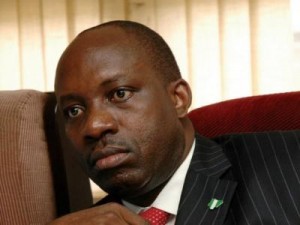 Former
Governor of the Central Bank of Nigeria (CBN) Professor Charles Soludo
has shown over the years that he is never scared to air his views. He
has spoken again, now faulting the implementation of the Treasury Single
Account (TSA) by the Federal Government and the policy regime of
foreign exchange restrictions of the CBN.
Former
Governor of the Central Bank of Nigeria (CBN) Professor Charles Soludo
has shown over the years that he is never scared to air his views. He
has spoken again, now faulting the implementation of the Treasury Single
Account (TSA) by the Federal Government and the policy regime of
foreign exchange restrictions of the CBN.


